
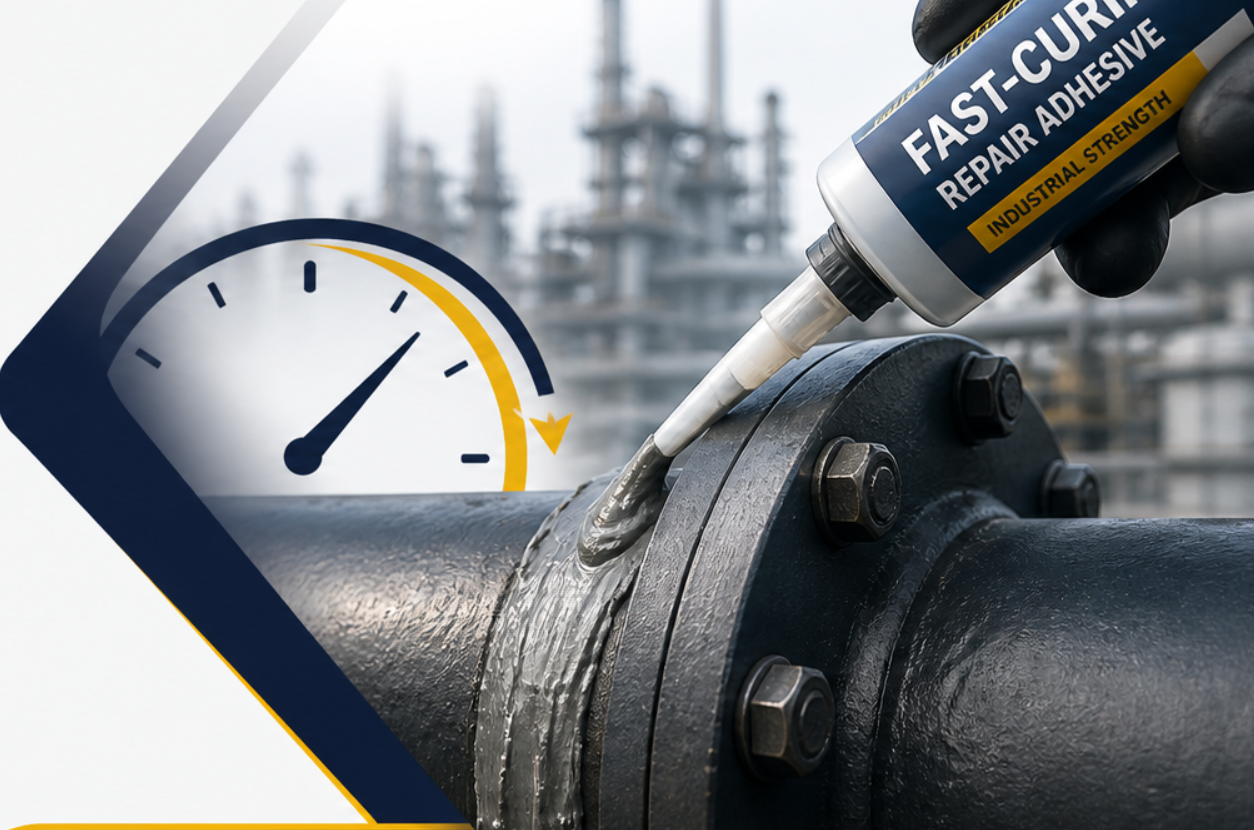

Every Minute of Downtime Costs Thousands of Dollars
In today’s competitive industrial world, production line downtime is one of the greatest enemies of profitability. According to statistics published by Henkel, unplanned stoppages in the world’s largest factories cause over one trillion euros in damages annually. In Iran’s oil, gas, petrochemical, and steel industries, every hour of equipment downtime can result in direct and indirect costs equivalent to several billion tomans.
The solution? Fast-Curing Repair Adhesives. A technology that enables instant repair of equipment, flanges, tanks, and pipes without the need for part replacement or prolonged production line shutdowns. In this article, we examine this technology, its mechanism of action, key applications, and how to choose the best product.
What Is a Fast-Curing Repair Adhesive and How Does It Work?
Definition and Chemical Structure
A fast-curing repair adhesive is a two-part adhesive composed of two main components: Resin and Hardener. Unlike traditional one-part adhesives that require hours or days to dry, these adhesives, with advanced epoxy, polyurethane, or acrylic formulations, achieve initial mechanical strength within a timeframe of 5 minutes to 2 hours.
Rapid Reaction Mechanism
The curing speed in these adhesives depends on several key factors:
| Influential Factor | Description | Effect on Cure Time |
|---|---|---|
| Ambient Temperature | Increasing temperature accelerates the chemical reaction rate | Every 10°C increase ≈ 2x faster curing speed |
| Mixing Ratio | Accuracy in combining resin and hardener based on weight or volume ratio | Deviation from standard ratio = reduced final strength |
| Hardener Type | Fast-cure hardeners in industrial formulations | Reduces cure time from 24 hours to 60 minutes |
| Fillers | Metallic (aluminum, steel, bronze) or ceramic additives | Enhances strength, thermal properties, and accelerates curing |
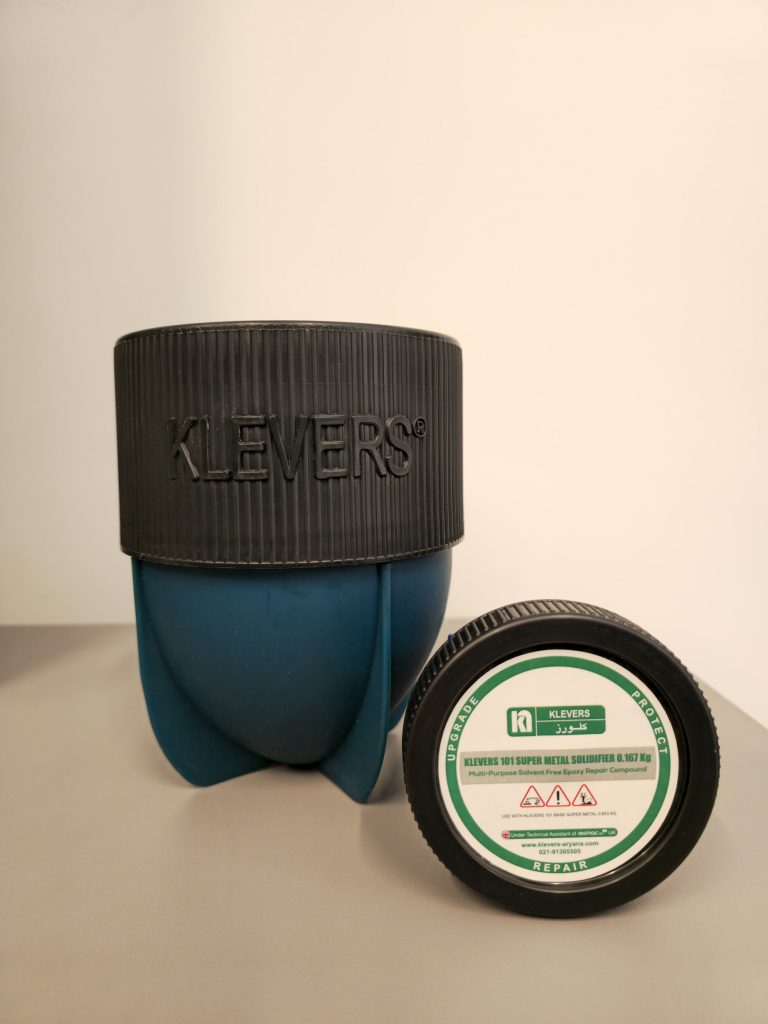
Key Point: Fast-curing epoxy adhesives like Klevers 101 achieve initial curing within 30 minutes and final curing within 4 hours at 20°C, with a minimum service life of 5 years.
Why Choose Fast-Curing Adhesive Over Traditional Methods?
Technical and Economic Comparison
Choosing between industrial adhesive and traditional methods such as welding, gasket replacement, or mechanical connections requires precise analysis. In a specialized article, we have addressed the comparison of Klevers industrial adhesive with traditional gaskets, but here is a quick comparison table:
| Comparison Criteria | Fast-Setting Repair Adhesive | Welding | Traditional Gasket Replacement |
|---|---|---|---|
| Equipment Downtime | 30 minutes to 2 hours | 4 to 8 hours (preparation + welding) | 2 to 4 hours (disassembly & reassembly) |
| Need to Interrupt Process Flow |  No No(in many cases) |  Yes Yes | Yes |
| Temperature Resistance | Up to 400°C (depending on type) | Unlimited | Up to 500°C (depending on material) |
| Labor Cost | Low (1 technician) | High (welder + helper) | Medium |
| On-site Execution | Yes |  Limited Limited | Yes |
| Repair Lifespan | 5 to 10 years | Permanent (if done correctly) | 1 to 3 years |
50% Reduction in Downtime
According to a report by AZOM, fast-curing industrial adhesives have been able to reduce asset downtime by up to 50% and enable repairs in hot and humid conditions. This feature is a critical competitive advantage in oil and gas industries where equipment often operates at high temperatures.
Key Applications of Repair Adhesive in Reducing Downtime
1. Emergency Flange and Connection Repairs
One of the most common cases requiring immediate repair is flange leakage in pipelines, tanks, and heat exchangers. In the article 5 Common Mistakes in Flange Repair, we have addressed errors that lead to re-leakage. Using Klevers 101 Adhesive as a traditional gasket replacement enables instant sealing even on uneven surfaces.
Case Study: At an oil refinery in southern Iran, a leak occurred from the main pump inlet flange during the night shift. Using fast-curing epoxy adhesive, the repair was completed in 90 minutes and the production line continued operating without an overnight shutdown.
2. Rapid Repair of Tanks and Pipes
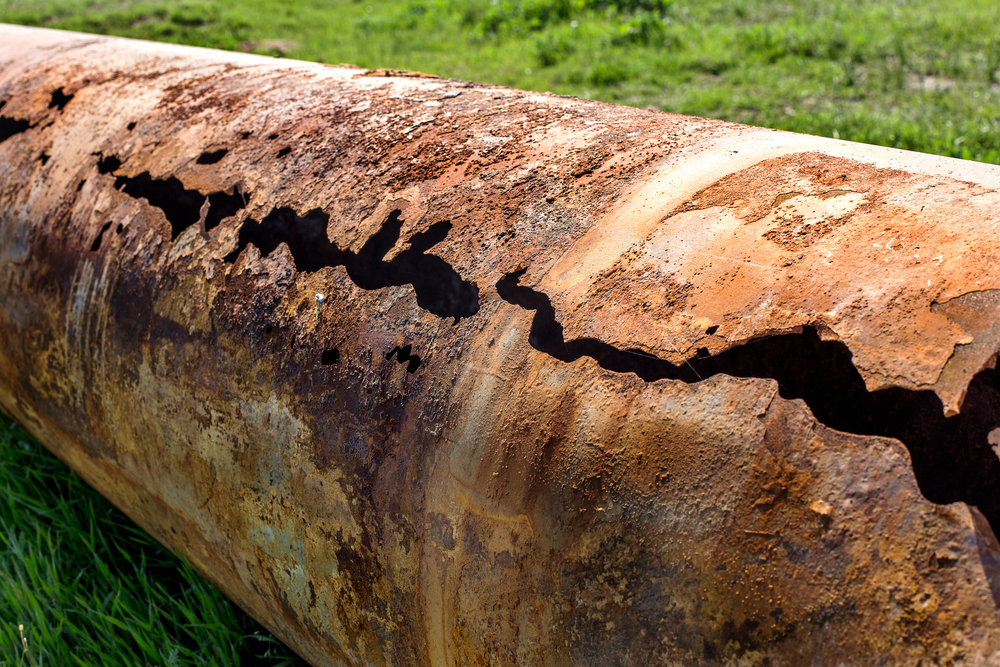
Two-part epoxy adhesives with metal filler have the capability to repair cracks, holes, and wear points in storage tanks and pipelines. These adhesives exhibit high compressive and shear strength after drying.
3. Restoration of Worn and Abraded Surfaces
Klevers 101 fast-curing two-part anti-wear coatings, containing metal particles, with a curing time of 30 minutes, enable the equipment to return to the production cycle within the same work shift. These products are ideal for protecting pipe elbows, cyclones, and areas subject to severe abrasion.
Guide to Choosing a Fast-Curing Repair Adhesive
Selection Parameters
Choosing the right repair adhesive requires considering several technical parameters:
| Parameter | Key Question | Recommended Klevers Aryana Product |
|---|---|---|
| Maximum Operating Temperature | At what temperature does the equipment operate? | Klevers 101 Adhesive (up to 250°C) |
| Material Type | Metal, concrete, ceramic, or composite? | Metal-filled epoxy adhesive for steel and aluminum |
| Required Speed | Do you need curing within 5 minutes? | Fast-cure FC Series adhesives |
| Mechanical Strength | Will it be subjected to pressure or impact? | Ceramic/metal-filled adhesives |
| Environmental Conditions | Humidity, chemicals, or oil? | Hydrocarbon-resistant adhesives |
Common Mistakes to Avoid When Using Repair Adhesives
According to industrial experience, 70% of unplanned shutdowns result from recurring and common failures. These failures are often caused by incorrect material selection or improper application. In the article 5 Common Mistakes in Flange Repair, we have addressed these issues:
- Inadequate Surface Preparation: Incomplete degreasing or failure to achieve White Metal standard
- Incorrect Mixing Ratio: Altering the resin-to-hardener ratio to accelerate curing
- Ignoring Ambient Temperature: Application below 10°C without a heater
- Premature Loading: Applying pressure before initial curing is achieved
- Choosing the Wrong Adhesive: Using a standard adhesive instead of a heat-resistant one
Conclusion: Investing in Time, Not Just Material
Fast-curing repair adhesives are no longer an “option”; they are a “necessity” in modern Maintenance, Repair, and Operations (MRO) management. With downtime reduced from 8 hours to 1 hour, the direct savings in labor costs, energy, and lost production are several times the cost of purchasing the adhesive.
Leading companies in the oil, gas, petrochemical, and steel industries have been able to reduce maintenance costs by 2 to 5 times by shifting their approach from “Reactive Maintenance” to “Proactive Maintenance” and utilizing advanced industrial adhesives.
.
About Klevers Aryana Company
Klevers Aryana Company, with over two decades of distinguished experience, is a pioneer in the supply and specialized production of refractory materials, thermal insulation, and industrial sealing systems in Iran. Klevers Aryana products include a wide range of two-part industrial adhesives, heat-resistant adhesives, flange sealing pastes, and anti-wear coatings, all manufactured and tested in accordance with international standards API, ASTM, and ISO.
The sales engineering and technical support team at Klevers Aryana is ready to provide expert consultation to select the best repair adhesive solution tailored to your operational conditions. From emergency flange repairs to extensive equipment restoration projects, we are by your side.
For a free consultation and to receive the technical product catalog, contact us:
- Phone: 02191305505
- Website:klevers-aryana.com
- Email:info@klevers-aryana.com
Klevers Aryana; Refractory and Sealing Solutions, from Repair to Sustainable Operation.
References for Further Reading
- Klevers 101 Adhesive – The Flagship Flange Sealing Product
- What Is a Two-Part Adhesive? A Comprehensive Guide to Choosing the Best Industrial and Heat-Resistant Adhesive (2025)
- 5 Industrial Adhesive Applications in Emergency Factory Repairs
- Comparison of Klevers Industrial Adhesive with Traditional Gaskets | Technical and Economic Analysis of Flange Sealing
- 5 Common Mistakes in Flange Repair That Cause Re-Leakage and Major Damage