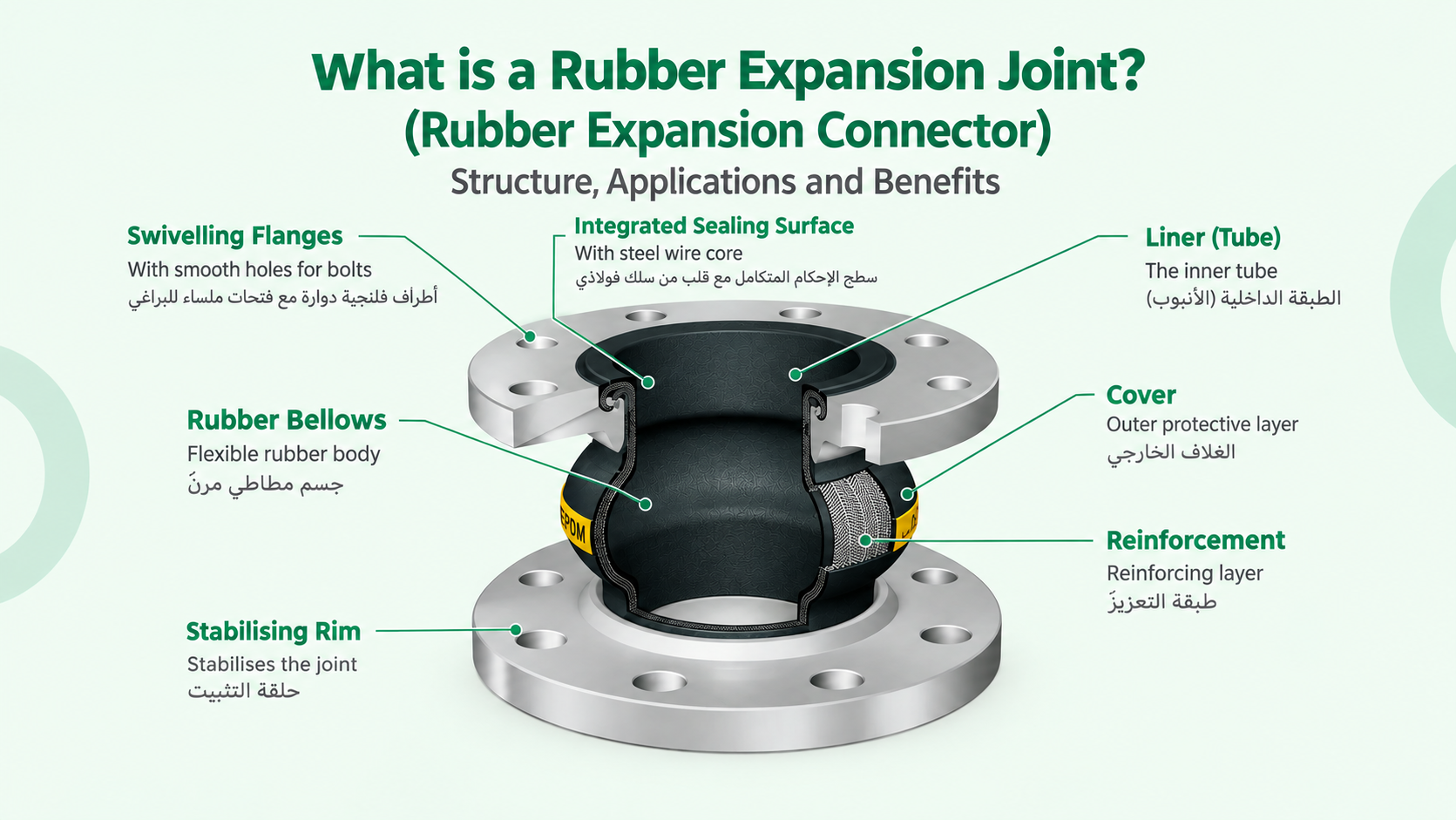

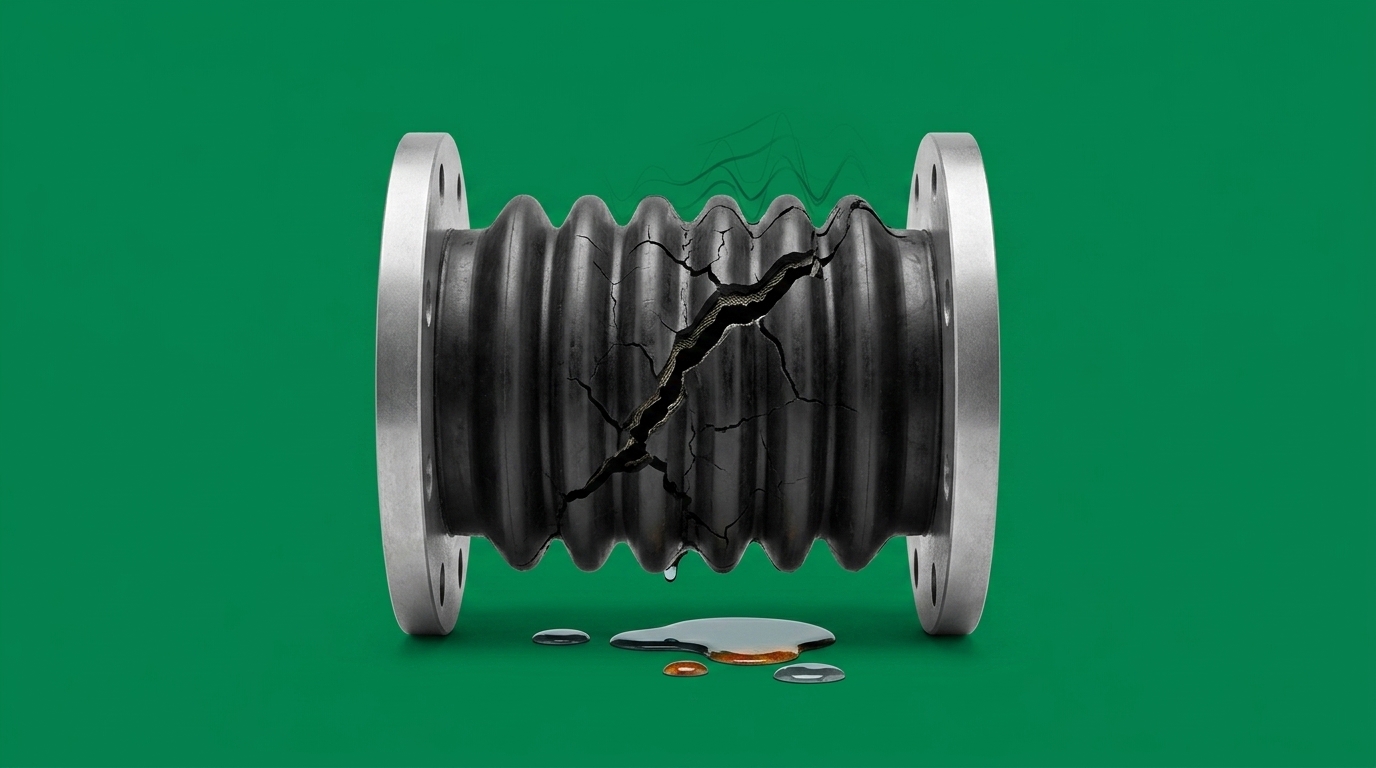

Buying an industrial vibration absorber, despite its simple appearance, is one of the sensitive technical decisions in the design and repair of pipelines. A wrong choice — whether in terms of material or movement dimensions — can lead to leakage and production line stoppage in the short term and damage to pumps and adjacent equipment in the long term. According to the experience of specialized expansion joint manufacturing companies, the majority of premature failures of these parts occur not due to product quality defects, but due to incorrect selection and purchase at the ordering stage.
This article is written for those who want to ensure they have all the necessary technical information before contacting a supplier or placing an order. If you are not yet familiar with the types of vibration absorbers, the price differences between models, and the technical criteria for selection, we suggest that before studying this checklist, you also see the article What is a vibration absorber? Types, price, and technical selection guide; that article provides a general introduction to the types, and this article complements it for the final purchase decision stage.
1. Why is buying the wrong vibration absorber so costly?
The real cost of an unsuitable vibration absorber is not just its purchase price. Production line stoppage for premature replacement, possible damage to adjacent flanges, and in the worst case, fluid leakage in the work environment, create costs several times the initial price of the product. Industrial analyses show that most premature failures of expansion joints and vibration absorbers are rooted in the mismatch between the selected product and the actual line conditions (pressure, temperature, or type of movement), not in the inherent weakness of the product material. To examine this issue more closely in the metal type, also study the article Metal expansion joint failure: causes, prevention, and specialized solutions.
2. STAMPED technical checklist: seven parameters you must determine before purchase
In the global expansion joint and vibration absorber industry, there is a standard and well-known framework for collecting technical information before ordering, known by the acronym STAMPED. According to this framework, introduced and promoted by industry experts (including member companies of the Fluid Sealing Association), before any price inquiry, the following seven parameters must be determined:
- Size (size): Exact pipeline diameter and connection flange dimensions.
- Temperature (temperature): Maximum and minimum operating temperature of the fluid, not just the average temperature.
- Application/Media (application and fluid type): Water, steam, chemicals, oil, or gas; and its corrosiveness or abrasiveness.
- Movement (type of movement): Axial, lateral, angular, or a combination of these.
- Pressure (pressure): Working pressure and also momentary pressure (pressure shock) if any.
- End Connection (type of end connection): Flanged, welded, or special connection.
- Diameter (effective inner diameter): The actual inner diameter through which the fluid passes and which may differ from the nominal line diameter.
Ignoring any of these parameters — especially the exact type of movement and momentary pressure — is the most common reason for product returns or premature failure of purchased vibration absorbers.
3. Questions you should ask the supplier before placing an order
Beyond the STAMPED technical parameters, there are several key questions whose answers directly affect the correct product selection:
- Has the product been tested for momentary temperature fluctuations (not just continuous temperature)?
- Is the material grade (in rubber types) chemically compatible with the fluid passing through?
- Is the product also suitable for vacuum or negative pressure conditions?
- What is the estimated cycle life of the product under conditions similar to your project?
- Is a technical data sheet and a certificate of conformity with standards provided?
- In case of problems, what are the after-sales services and warranty like?
4. Most common mistakes in buying industrial vibration absorbers
- Choosing solely based on the lowest price: Without considering technical compatibility with line conditions, which in the long term imposes premature replacement costs.
- Ignoring the exact type of pipeline movement: Using a model that only covers axial movement, while the line also needs to absorb lateral movement.
- Failure to inquire about chemical compatibility: Especially in rubber types where the elastomer grade must be selected according to the fluid.
- Ignoring the actual installation space: Some models require a longer face-to-face length that may not match the available space in the line.
- Buying without specifying the flange standard: Mismatch of flange standard (e.g., ANSI vs. DIN) can cause project stoppage at the installation stage.
5. Preparing a technical inquiry sheet before contacting the supplier
The best way to avoid time-consuming back-and-forth in the purchasing process is to complete a simple technical inquiry sheet before contacting the seller. The Fluid Sealing Association (FSA) in recent editions of its technical handbook has designed exactly such an inquiry sheet for end users so that the necessary information for accurate responses from manufacturers is prepared in advance. Some European manufacturers also provide a similar checklist and inquiry sheet online to customers. Completing such a sheet before contacting shortens the time to receive a proforma invoice and greatly reduces the chance of selection error.
Conclusion
Buying the right industrial vibration absorber is a decision beyond price comparison. Accurately determining the seven STAMPED parameters, asking the right technical questions from the supplier, and being aware of common mistakes can prevent hidden costs caused by production line stoppage and premature replacement. The technical team of Klevers Aryana reviews these parameters with you before any price offer so that you receive a vibration absorber suited to the actual conditions of your project, not just the cheapest available option.
References
- What is a vibration absorber? Types, price, and technical selection guide 2026
- Metal expansion joint failure: causes, prevention, and specialized solutions
- Complete encyclopedia of expansion joints (types of expansion joints): metal, fabric, rubber
- Golden tips for installation and maintenance of expansion joints
- Product page: Expansion joints
- Pumps & Systems – «Top Tips: How to Select the Right Expansion Joints», introducing the STAMPED framework for correct selection and purchase: https://wp.mydigitalpublication.co.uk/july-august-2023/page-42
- Fluid Sealing Association (FSA) – Technical Handbook for Expansion Joints Piping, including standard technical inquiry sheet for buyers: https://www.fluidsealing.com/expansion-joints/expansion-joints-publications/
- Lawrence Berkeley National Laboratory – Expansion Joint Selection Guide, list of technical parameters required before ordering: https://www-eng.lbl.gov/~shuman/NEXT/GAS_SYS/expansion_joints.pdf
- Belman A/S – Checklist & Inquiry Sheet for Expansion Joints, sample technical inquiry sheet for customers: https://www.belman.com/?p=85095